How City Year Columbus Uses Cognitive Coaching in Schools
Editor’s Note: This article highlights a session selected for presentation at Learning Forward’s Annual Conference and shares lessons learned through City Year Columbus’ implementation of Cognitive CoachingSM.
Every teacher, student success coach and school leader brings unique experiences, perspectives and identities into their work. The question is: How can those differences become strengths that deepen learning, strengthen professional practice and improve outcomes for students?
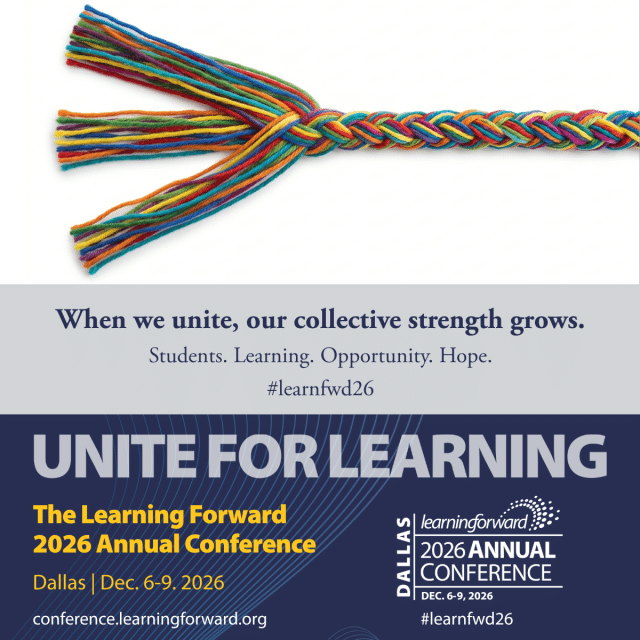
That’s the focus of Coaching in the Presence of Difference, a session selected for presentation at the upcoming Learning Forward Annual Conference, Unite for Learning, taking place in Dallas, December 6-9.
City Year Columbus Learning & Evaluation Director Taylour Aungst will present alongside Dr. Marguerethe Jaede, a Cognitive CoachingSM training associate, sharing lessons from City Year Columbus’ implementation of Cognitive CoachingSM . They’ll explore how coaching can help educators and other student support professionals learn, reflect and grow across lines of difference.

City Year AmeriCorps members are student success coaches.
Across five Columbus City Schools this year, 30 City Year Columbus AmeriCorps members are serving as student success coaches, expanding the support available to students and educators.
Student success coaches are supported by City Year Impact Managers, who play a key role in coaching and developing AmeriCorps members throughout the school year. Impact Managers regularly observe practice, facilitate reflection and provide ongoing guidance designed to help student success coaches grow their skills and better support students.
Investing in Adult Learning to Improve Student Outcomes
At City Year, we know students are more likely to thrive when the adults who support them have opportunities to learn, reflect and grow.
That belief shapes the work of City Year Columbus, where coaching is embedded into a broader culture of learning and continuous improvement, says City Year Columbus Executive Director Ruth Lomax.
“Through structured reflection, coaching conversations and data-informed professional development, staff, AmeriCorps members and educator partners strengthen their practice in ways that ultimately benefit students,” Lomax said.
Central to this approach is Cognitive CoachingSM, a research-based professional learning model developed by Thinking Collaborative. Rather than focusing on giving advice, Cognitive Coaching helps individuals become more reflective, self-directed and intentional through questioning, active listening, paraphrasing and thoughtful pauses that support deeper thinking.
What Does “Coaching in the Presence of Difference” Mean?
Every coaching conversation is shaped by identity, culture, lived experience and context. Effective coaching recognizes those realities rather than ignoring them, said Taylour Aungst.
“In this session, we’ll explore how City Year student success coaches can become more aware of themselves, better understand the perspectives of others and build relationships grounded in trust, curiosity and collaboration,” Aungst said.
Participants will leave with practical strategies for:
- Building stronger coaching relationships across differences in identity and experience
- Using inquiry and reflection to deepen learning
- Identifying barriers that can limit professional growth
- Creating coaching cultures centered on collaboration rather than compliance
- Supporting more equitable and effective professional learning
At its core, the work is about helping educators and student support professionals learn with and from one another, even when their perspectives and experiences differ.
How City Year builds relational trust in the schoolhouse.
What City Year Columbus Is Learning
The presentation is grounded in real-world implementation and ongoing learning.
City Year’s data reflected growth both in student success coach self-directedness and improved instructional effectiveness with students, but also growth in the Impact Manager’s ability to confidently coach their student success coaches towards success.
Between October 2024 and November 2025, City Year Columbus Impact Managers conducted 85 coaching conversations with student success coaches serving students in grades three through 10 across English language arts and mathematics classrooms.
Student success coaches reported an average satisfaction score of 4.93 out of 5 and cited stronger reflection, instructional planning and confidence in their practice.
The coaching model also supported growth among Impact Managers. Impact Managers demonstrated measurable growth in core Cognitive Coaching skills, including questioning, paraphrasing and pausing, while student success coaches reported making tangible changes to lesson design, social-emotional learning integration and classroom management. Observation data further showed substantial growth in instructional effectiveness over time.
Together, these findings demonstrate growth both in student success coach self-directedness and instructional effectiveness, as well as in Impact Managers’ ability to confidently coach and support student success coaches toward success.
These findings reinforce an important lesson: when professional learning is rooted in reflection, trust and authentic partnership, educators, coaches and other school-based staff are more likely to apply new insights in ways that benefit students.
Why This Matters
At its core, coaching is not about improving adult practice for its own sake. It’s about creating stronger learning environments for young people.
When educators and student success coaches become more reflective, adaptive and responsive, students benefit. Relationships deepen. Classrooms become more engaging. Opportunities for growth expand.
The work being shared by City Year Columbus highlights how meaningful professional learning happens when people approach one another with curiosity, reflection and a willingness to learn across difference. As schools and youth-serving organizations seek effective ways to support educator development and student success, Cognitive Coaching and relationship-centered professional learning can be powerful tools for strengthening practice, building trust and helping every student thrive.
Learn more about City Year’s holistic approach to student and school success.
FAQ
What is Cognitive Coaching?
Cognitive CoachingSM is a research-based professional learning approach that helps educators and other school professionals become more reflective, self-directed and intentional in their practice. Rather than focusing on giving advice, Cognitive Coaching uses questioning, active listening, paraphrasing and thoughtful pauses to help individuals think more deeply about their work and identify their own solutions.
How does Cognitive Coaching support educator growth?
Cognitive Coaching supports educator growth by creating structured opportunities for reflection and professional learning. Through coaching conversations, educators can strengthen instructional planning, build confidence, improve decision-making and apply new insights in their daily work.
What does “coaching in the presence of difference” mean?
Coaching in the presence of difference recognizes that every coaching conversation is shaped by identity, culture, lived experience and individual perspectives. Effective coaching embraces those differences and uses them as opportunities for learning, trust-building and collaboration.
What are student success coaches?
Student success coaches are City Year AmeriCorps members who partner with classroom teachers to provide academic and interpersonal support to students. They serve as tutors, mentors and near-peer role models, helping students build skills, confidence and a stronger sense of belonging.
How does City Year Columbus use Cognitive Coaching?
City Year Columbus uses Cognitive Coaching practices to support the professional growth of student success coaches through regular coaching conversations, reflection, classroom observations and continuous learning opportunities led by City Year Impact Managers.
What results has City Year Columbus seen?
Student success coaches reported high levels of satisfaction with the coaching process and described improvements in reflection, instructional planning and confidence. Coaching leaders also demonstrated measurable growth in core Cognitive Coaching skills, while observation data showed gains in instructional effectiveness over time.
Why does educator coaching matter for students?
When educators and student success coaches have opportunities to learn, reflect and improve their practice, students benefit from stronger relationships, more engaging learning experiences and increased opportunities for success.
Share This Story


Related stories
Your City Year service journey can be hard to describe. Check out these tips for describing your service to friends...
Read more about Holiday Edition: Five ways to describe your City Year to your familyMeet City Year is a monthly series that highlights our corps, staff and alums across the country, showing different aspects...
Read more about Meet City Year: Building a Public Policy Career Through National ServiceIf you are a recent high school graduate or a current college student unsure what to do this fall, City...
Read more about City Year offers a fantastic gap year experienceHere are four ways we work to support City Year AmeriCorps member wellbeing and mental health during their service year...
Read more about Resources to support the mental health and well-being of our corps